




Speakers
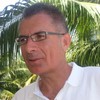
Javier Díaz-Nido
Javier Díaz-Nido is currently Full Professor in the Department of Molecular Biology of Universidad Autónoma de Madrid (UAM). Doctor in Biological Sciences (Molecular Biology) by Universidad Autónoma de Madrid (1988). He completed a postdoctoral stay at Cold Spring Harbor Laboratory (New York, USA). He has developed all his research work in Molecular Neurobiology, mainly in the field of neurodegenerative diseases. Co-author of more than 80 publications in international scientific journals and co-inventor of several patents. Since 2002, he has led a research group at Centro de Biología Molecular Severo Ochoa (UAM-CSIC) focused on the study of Friedreich´s ataxia. In Universidad Autónoma de Madrid, he coordinated the development of the new study plans and the implementation of the Bachelor Degree in Biochemistry, the Master in Molecular Biomedicine and the PhD Program in Molecular Biosciences. He is currently the Director of the Doctoral School of Universidad Autónoma de Madrid (since 2016).
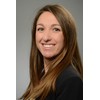
Raquel Sanz Soler
Dr. Raquel Sanz Soler graduated in Biochemistry and obtained a Master in Biochemistry and Molecular Biology at the University of Valencia. She was a PhD candidate at the Institute of Biomedicine of Valencia, (CSIC), including two short stays in Germany and USA. She is a Doctor in Biomedicine and Biochemistry, currently working as a postdoctoral researcher at the University Hospital, Institute of Physiological Chemistry and Pathobiochemistry, Münster, Germany and active member of CERFA
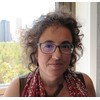
Ana Puy
Dr. Ana Puy, PhD in Psychology from the Complutense University of Madrid, is the Director of the Women and Science Unit (UMyC) at the Cabinet of the State Secretariat for Universities, Research, Development and Innovation within the Ministry of Science, Innovation and Universities, Spain, since 2014.
She is also Associate Professor of Social Psychology at the University of La Laguna (ULL) where she was the first Director of the Gender Equality Unit (2010-2014).
She is the Spanish delegate at the Council of the European Union ERAC Standing Working Group on Gender in Research and Innovation (and former Helsinki Group).

Mina Stareva
She is the Head of the Gender Sector in DG Research and Innovation, at the European Commission. She holds a bachelor’s degree in Law from Robert Schuman – Strasbourg University and a Master of Arts degree in Political Sciences from the College of Europe. Prior to joining the Science with and for society unit in DG Research and Innovation, she has been working on developing the European Research Area policy and international cooperation.
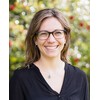
Juliana Martins
Juliana M Rosa is a senior scientist working in the Experimental Neurophysiology group at the Hospital Nacional de Parapléjicos, Toledo. Her research focuses on understanding the mechanisms that control the reorganization of cortical regions in the brain after a spinal cord injury. Juliana is originally from Brazil and came to Spain in 2005 to take a PhD at the Universidad Autonoma de Madrid. In 2011, she was awarded with her first IEF Marie Curie Fellowship to join the Laboratory of Molecular Biology, Medical Research Council – University of Cambridge (UK) where she studied distinct aspects of neural circuits that encode frequency domains in the retina. Then, she moved to the University of California, Berkeley (USA) to study how parallel pathways in the retina interact to give rise to complex outputs to the brain. In addition, she studied how retinal neurons interact with glial cells during development. In 2016, Juliana had to stop her scientific career due to medical care towards her newborn son and returned to Spain. It was only by the end of 2017 that she actively returned to her scientific career with a Stop Fuga de Cerebros fellowship from Roche Pharma to join the Hospital Universitario La Princesa. At the beginning of 2018, she was then awarded with her second IF Marie Curie Fellowship in the panel of Career Restart due to her maternity break. Juliana is now a senior researcher at the Hospital Nacional de Parapléjicos studying how astrocytes and interneurons modulate the mechanisms of plasticity in the brain after central nervous system injuries.
Aurelio Hidalgo
Aurelio Hidalgo is Assistant Professor in the Department of Molecular Biology (UAM) and researcher at CBMSO. Aurelio holds a Ph.D in Biochemistry and Molecular Biology from the University of the Basque Country (2001) and obtained a Best Doctorate Award. After two postdoctoral stays on enzyme immobilization and directed evolution at ICP-CSIC and Greifswald Unviersity (Germany) respectively, he returned to Spain with a Ramón y Cajal fellowship and was promoted to Assistant Professor in 2011. His activities involve research, teaching and outreach. His research interest is to develop (ultra)high-throughput screening methods to find enzymes for industrial biotechnology in large libraries of natural or man-made diversity using biological selections and/or droplet microfluidics. He has led and participated in several national and EU-funded projects and is the coordinator of H2020 project "MetaFluidics". He teaches undergraduate courses in Microbiology, Enzyme Biotechnology and Biochemistry and Society, holds a degree as Expert in Higher Education by UAM and carries out research on different aspects of STEM education, such as active learning, deliberate practice and soft skills. His group and himself have a particular interest in scientific outreach, having taken part in events such as ESOF, European Night of Researchers and Pint of Science among others.
Tania Romacho
Tania Romacho is a freelance scientific consultant at s-trom. She is CERFA Ambassador in Spain and Secretary of the Marie Curie Alumni Association Working Group on Gender Equality and Diversity for Mobile Scientists (GEMS) since 2018. She returned with a Postdoc fellow Juan de la Cierva (Talent Attraction Program) to Universidad Autónoma de Madrid (UAM). Her research has focused on identifying therapeutic targets to treat/prevent vascular damage due to metabolic diseases such as obesity and type 2 diabetes. Tania holds a BSc. in Biology (University of Granada), with Erasmus in Uppsala Universität. European PhD in Pharmacology at UAM with FPU stay at the University of Liverpoool, awarded Extraordinary prize. Postdoc at the German Diabetes Center in Düsseldorf with a Marie Curie-IEF. She was awarded the Young Investigator Award of the Spanish Society of Pharmacology in 2014. Being a mentee of the Heinrich Heine University SelmaMeyerWISS+Programme (2014-2016) drove her interest to advocate for Gender Equity in Research, Mentoring Programs and soft skills training.
Domingo Sánchez-Zarza
Dr. Domingo Sánchez-Zarza is an international expert in developing Strategic Innovation Partnerships and Ecosystems between industry, academia and government.
Dr. Sánchez-Zarza has built international consortia for large Research and Development projects (R&D) as a part of the EU Funding (FP7, H2020). He has served as a contact point for opportunities in Competitive Industries under Horizon 2020. He has also built and established Innovation Processes & Key Account Management in R&D projects in Public and Private sectors in the areas of ICT, Transport, Water, Advanced Materials and Manufacturing, Health, Robotics among other strategic priorities in Europe.
Dr. Sánchez-Zarza was responsible for supporting industry-academia partnerships and collaborations, and consultancy interactions in Dublin City University and acted as Primary Point of Contact for the Faculty of Engineering and Computing. He also managed the industry and commercialisation-related awards, including Enterprise Ireland awards and SFI Research Centres, SFI Industrial doctorates and TIDA awards.
Domingo has been an associate researcher at the Institute for International Integration Studies, IIIS in Trinity College Dublin. His PhD was dedicated to the research in International Business structures, Interdisciplinary and Complex Networks, Optimization Processes, Migration and Innovation.
He worked as a Director and currently is a collaborator with an experimental art initiative, Espacio de arte contemporaneo “EL GALLO”.
Dr. Sánchez-Zarza holds an international PhD in Business Administration and an MBA from Nebrija University and Trinity College Dublin.
He also holds a degree (BSc) in Geology from Salamanca and Coimbra University and has an extensive experience in Civil Engineering and managing large infrastructure projects. Domingo worked in one of the biggest international tunnel infrastructure projects, CALLE 30 in Madrid, and a high speed railway infrastructure, AVE (Madrid-Levante).
Eduardo Oliver
Eduardo Oliver is a Senior ‘Madrid Talent’ Research Fellow at the Spanish National Center for Cardiovascular Research (CNIC; Madrid), SRUK/CERU Ambassador in Spain and Former Secretary-General of the Network of Associations of Spanish Researchers and Scientists Abroad (RAICEX). Eduardo is a PhD in Pharmacology who develops an international academic career on the search of new therapeutic targets and strategies against cardiovascular disease. He is recipient of the 2016 Young Investigator Award of the European Federation of Pharmacology (EPHAR) and the 32nd Young Pharmacologist Award of the Spanish Society of Pharmacology. During his tenure at Imperial College London, he played an important role in the conception and development of the Society of Spanish Scientists in the United Kingdom (SRUK/CERU), in which he held various responsibilities, becoming its president (2015-16) and current ambassador in Spain. He is a science advocate, being involved in different initiatives related to science policy, science diplomacy and science advice. Eduardo is member of the DECIDES Committee on Scientific Policy of the Confederation of Spanish Scientific Societies (COSCE); expert member on expatriate scientific talent networks of ‘Los 100 de Cotec’; and one of the coordinators of the citizen initiative ‘Ciencia en el Parlamento’ that promotes the use of science for policy.
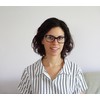
Rosa Torguet Dolz
Rosa Torguet Dolz is a designer with over 8 years of working experience. After studying Industrial Design in the Unversity of Zaragoza (Spain) she started her career as a product developer. Rosa craved a design approach that shifted the focus from manufacturing processes to people's needs. She embarked on her Master studies on Participatory Innovation at the Southern Denmark University. Doing user research and incorporating stakeholders through the innovation process became two of the key ingredients of her 'design recipe'. She worked at Point-Blank, a market research agency based in Berlin, where she learnt the ropes of design research. Afterwards she taught design at the University of the Andes in Colombia, where she witnessed how design has the potential to become a tool to tackle today's social challenges. Back to her roots in Madrid, she focused on digital design designing employee services at Accenture. Currently her energy goes into designing public services at Volvemos.org, where she is shaping a methodology to design public policies with participation at the core of the process.
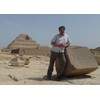
Miguel Gómez-Heras
Miguel Gomez-Heras is Doctor in Geology (2005) and “Profesor Ayudante Doctor” at the Department of Geology and Geochemistry of the Universidad Autónoma de Madrid. His research interests focus on rock weathering processes in cultural and geological heritage. Over the years, he has carried out field-based research in numerous listed buildings and protected natural landscapes across the world, which led to more than 85 publications.
After his PhD graduation in June 2005, he worked at Queen’s University Belfast for 3.5 years, returning to Spain in 2009 with a 3-years Juan de la Cierva research contract at the Universidad Complutense. In addition to that, he has hold several postdoctoral researcher contracts at Universidad Politécnica de Madrid, Universidad Complutense and the Spanish Research Council before starting with a non-permanent lectureship at UAM in late 2016.
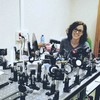
Judith Birkenfeld
Judith Birkenfeld received an MSc in Medical Physics, a German Diplom in Physics, and a Certificate in Economics from Heidelberg University, Germany. For her doctoral research, she transitioned to the field of Biomedical Optics. Funded by a JAE Predoc Fellowship at the IO-CSIC, Madrid in Spain, she investigated the effect of the crystalline lens’ refractive index and its influence on optical aberration, with important implications in new intraocular lens designs. This work earned her a PhD in Physics with honors from Complutense University. She was awarded with an M+Visión Catalyst Fellowship at the Massachusetts Institute of Technology (Cambridge, USA), where she has created and supported healthcare projects in the area of skin screening and dehydration detection. Her work was further supported by an MSCA Fellowship in collaboration with Brigham and Women’s Hospital/Harvard Medical School and the Rey Juan Carlos University, and has earned her the title Rising Star in EECS 2016 from MIT/Carnegie Mellon University and an Innovation Discovery Award. In 2017, she started her current project on early detection of corneal pathologies like keratoconus. This collaborative work between the Wellman Center for Photomedicine/HMS in Boston and the IO-CSIC has brought Dr. Birkenfeld back to Spain, where she is currently working as a MULTIPLY MSC Action Fellow at the Visual Optics and Biophotonics Laboratory (PI: Susana Marcos). The project is integrated within the H2020 ERC project IMCUSTOMEYE.
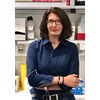
Concepción Peiró
Concepción Peiró is an Associate Professor in Pharmacology at the Faculty of Medicine, UAM, where she co-leads the research group FARMAVASM, dedicated to the understanding of vascular physiopathology and pharmacology. At the postgraduate level, she has been the coordinator of the PhD Programme in Pharmacology and Physiology, and has served as Vice-Dean for Postgraduate Studies at the Faculty of Medicine. She is currently appointed as Vice-Director of the Doctoral School at UAM.
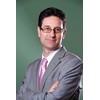
José Manuel González Sancho
José Manuel González Sancho graduated in Chemistry (1993) with a major in Biochemistry and Moleculr Biology. He obtained his PhD in 1998 in UAM, where he is a an Associate Professor in Biochemistry and Moleculr Biology at the Faculty of Medicine. He did a postdoct at the Strang Cancer Research Laboratory Cornell University (NY, USA, 2000-2003). Vice-Director of the Institute of Biomedical Research “Alberto Sols” (UAM-CSIC, 2013-2015), co-coordinator of the Master in Molecular Biomedicine (2014-2017), Adjunct Vice-Rector for Research (2015-2017). He is currently Vice-Rector for Research of UAM.