



Speakers
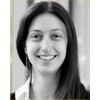
Elisa D'Este
Elisa studied Biotechnology at the University of Trieste (Italy), where she obtained her Ph.D. working on applications of optical tweezers in neuroscience. After graduation, she joined the department of Stefan Hell at the Max Planck Institute for Biophysical Chemistry in Göttingen as a postdoctoral fellow. During these years, she specialized in the use of nanoscopy techniques to study neuronal structures, in particular the organization of the neuronal cytoskeleton. Since 2017, Elisa is PI of the collaborative research center SFB1286 (Quantitative Synaptology). In 2018 she joined the MPI for Medical Research in Heidelberg, where she conducts independent research and heads the optical microscopy facility specialized in nanoscopy techniques.
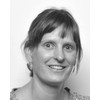
Ulrike Engel
Ulrike is a cell- and developmental biologist educated in Basel, Frankurt and Darmstadt. During a post-doc at Harvard Medical School, Boston, she found her interest in imaging polarized cells on the move. There she started using high spatial and temporal imaging to detect how signaling to the cytoskeleton drives cell protrusions. 2005 she came to Heidelberg University at COS to built and lead the Nikon Imaging Center at Heidelberg University. This light microscope facility offers a wide range of techniques from nano to mm-scale, to support researchers across Campus in their research. Ulrike’s expertise in microscopy is wide spread, with a focus on live imaging and subcellular structures. While TIRF has been one of her favorites, a recent addition to the facility is a STORM setup, complementing the super-resolution portfolio on Campus. Ulrike has been teaching courses in light microscopy and handling of digital images the last 15 years.
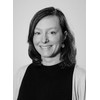
Charlotte Kaplan
Charlotte finished her biology diploma in Heidelberg and Toulouse (France) investigating quantitatively the cell’s chromatin structure by fluorescence microscopy. She continued afterwards with her PhD education at ETH Zurich (Switzerland) and postdoctoral research in David Drubin’s lab at UC Berkeley (USA) applying in both laboratories single-molecule localization microscopy (dSTORM) to study the role of cytoskeletal organizations in cell function. Charlotte became an application specialist of advance fluorescence light microscopy techniques over these years, with the focus on single-molecule localization microscopy and quantitative data and image analysis. In September 2022 Charlotte has started her position as a super-resolution microscopy specialist at the Cellnetworks Core Technology Platform at Heidelberg University with the current focus of implementing MINFLUX nanoscopy and supervising future super-resolution microscopy projects
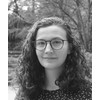
Severina Klaus
Severina spent the last 11 years in Heidelberg as a student, obtaining her PhD in parasitology in 2022. Since then she is splitting her time working as a research scientist in virology and working as a microscopy application specialist in the Infectious Diseases Imaging Platform (IDIP) at the Center for Integrative Infectious Disease Research (CIID) in Heidelberg. Her work covers basic aspects of cell biology and infectiology and centers around advanced microscopy approaches with a focus on live-cell imaging, super-resolution microscopy and image analysis.
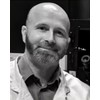
Vibor Laketa
Vibor obtained his PhD at the European Molecular Biology Laboratory (EMBL), Heidelberg, Germany where he worked on automated microscopy setups for high-content screening and their application in investigating diverse cellular processes. After the PhD he continued his research as a staff scientist at the EMBL where he operated at the interface between advanced light microscopy, robotics, chemical biology and cell biology. In 2013. he joined University Hospital Heidelberg and German Center for Infection Research (DZIF) to establish the microscopy infrastructure under enhanced biosafety containment (BSL2/BSL3) for infectious disease research. As head of Infectious Diseases Imaging Platform (IDIP) he is interested in all aspects of advanced microscopy applications in infectious disease research as well as development of microscopy-based assays in medical diagnostics. He has long experience in teaching various aspects of light microscopy technologies and digital image handling.

Marko Lampe
Marko studied biochemistry at the University of Hannover and moved to Heidelberg for his PhD, where he studied HIV-1 entry into human cells using advanced light microscopy. He then moved to the Laboratory of Molecular Biology (LMB) in Cambridge, where he used TIRF microscopy to study clathrin-mediated endocytosis. After two years in industry, working as Application Manager for SMLM at Leica Microsystems, Marko joined the Advanced Light Microscopy Facility (ALMF) at EMBL to train and support scientists in advanced microscopy techniques. He had a special focus and passion for SMLM and STED super-resolution microscopy. Since October 2024, he is working as an Imaging Scientist at the DKFZ Light Microscopy Core Facility.
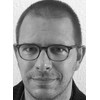
Holger Lorenz
Holger is a cell and molecular biologist educated at the Universities of Göttingen and Munich (LMU), Germany. He did his postdoc research at the National Institutes of Health, NIH, USA, in Dr. Jennifer Lippincott-Schwartz’s lab with a focus on advanced light microscopy of subcellular processes. After having spent a couple of years in the optical industry, he joined in 2008 the Center of Molecular Biology (ZMBH) at the University of Heidelberg to set up a core facility for advanced imaging. He serves as head of the core facility to support researchers with light microscopy - ranging from basic to superresolution/nanoscopy - and image analysis/processing applications. Holger has been active in developing microscopy applications to determine protein topologies and sub-locations, and he has a long track record of teaching digital image analysis to under- and postgraduates. His courses cover all aspects of image processing including the ethically- and quantitatively-correct use of existing analysis tools and goal-oriented software programming.
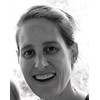
Sylvia Olberg
Sylvia studied Biochemistry in Berlin and obtained her PhD in cell biology at the Pasteur Institute in Paris working on host pathogen interactions. Already during her PhD she was fascinated by microscopy and worked as an associated scientist at the imaging platform of the Pasteur Institute. Following, she joined the lab of Freddy Frischknecht at the University Hospital in Heidelberg to investigate cell motility of malaria parasites using live cell imaging as well as TIRF and traction force microscopy. During this postdoc she decided to stay in the microscopy community and joined Carl Zeiss Microscopy GmbH to work as widefield and super resolution specialist in the European demo center of Carl Zeiss in Munich. She decided to come back to the academic setting and after briefly working in the imaging facility in Freiburg, she joined Infectious Diseases Imaging Platform (IDIP) at the University Hospital Heidelberg as the imaging specialist.