



About
Cultural heritage is commonly thought as a product of the longstanding link between people and their own territory. But, as anthropologist James Clifford shown us, in our contemporary world culture and identity are associated to "routes" as much as to "roots". We are prompted to recognize that different kinds of mobility and flows are closely connected to the global dynamics of place making.
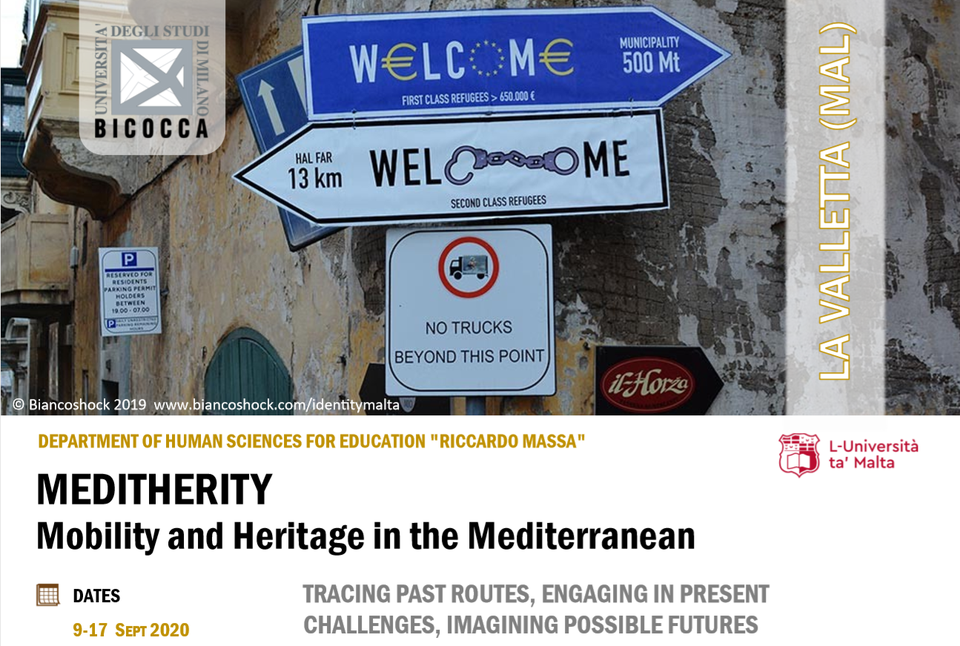
The Mediterranean is one of the most significant areas where we can observe this phenomenon. Here the constant movement of tourists and migrants across both sides of the sea in the last decades has been producing several (un)expected encounters. On the beaches of Lesvos and Kos as in the ethnic neighbourhoods of Marseille and Barcelona, in the "Sea Memory Museum" of Zarzis as at "Porto M" of Lampedusa, the clear-cut border between tourism and migration is contested and vanished.
In order to follow the paths of this "heritage on the move" we can combine different fields of studies and manage a variety of approaches, ranging from engagement in theoretical debate to application of our skills in innovative projects.
Developing the approach successfully tested during the first edition of the program in 2019 , the main aim of the second edition of the Summer School will be to improve the knowledge of the participants in the anthropology of mobility and heritage and their capacity to develop a fruitful cooperation with private and public agencies.
The Summer School will be divided in sets of lessons and activities including analysis of theoretical and methodological tools; presentation of case studies with an ethnographic approach; visits to specific places and institutions engaged in migration and tourism in Malta.
Topics Covered
Tourism-led migration and Migration-led tourism
Roots tourism/Diaspora tourism
Ethnic neighbourhoods as places of leisure and consumption
Everyday multiculturalism
Responsible and ethic tourism
Applied/Public anthropology
Border studies
Geolocation will be visible after you sign in.